
Expert Persian Rug Guides & Decor Tips: How to Buy, Style, and Care for Handwoven Rugs
Have you ever looked around your room and thought, “Something is missing, but what?” Maybe your furniture is beautiful, your walls are freshly painted, and your lighting is just right, yet the space still feels a little cold or unfinished. The answer may be right under your feet!
A beautiful rug can bring warmth, color, texture, and personality to your home in an instant. At Persian Galleries of Knoxville, we believe the right rug does more than cover a floor. It anchors your furniture, welcomes your guests, and helps turn your house into a home!
Whether you are shopping for Persian rugs, oriental rugs, hand knotted rugs, or a charming runner rug, this guide will help you buy, style, size, and care for your piece with confidence.
Persian Rugs and Oriental Rugs: What Is the Difference?
The terms Persian rugs and oriental rugs are sometimes used interchangeably, but there is a small difference.
- Persian rugs traditionally refer to rugs handwoven in Iran, formerly known as Persia.
- Oriental rugs are a broader category that includes handwoven rugs from Iran, Turkey, the Caucasus, Central Asia, China, and other regions.
- Hand knotted rugs are made by tying individual knots by hand, creating a durable foundation and detailed pattern.
- Handwoven rugs may include hand-knotted, flatweave, and other traditional weaving techniques.
All Persian rugs are oriental rugs, but not all oriental rugs are Persian. Each region has its own colors, motifs, weaving traditions, and personality. That is part of the fun!
How to Buy Authentic Persian Rugs
Shopping for authentic Persian rugs should feel exciting, not overwhelming. Before you fall in love with a pattern, take a few minutes to look closely at the rug’s construction.
1. Turn the Rug Over
The back of a genuine hand-knotted rug should reveal the pattern and individual knots. The design will usually be nearly as visible on the back as it is on the front.
A thick canvas backing, heavy glue, or a perfectly uniform surface may indicate a machine-made or hand-tufted rug. That is a big NO-NO if you are specifically looking for a traditional hand-knotted piece!

2. Check the Fringe
On authentic Persian rugs and many other handwoven rugs, the fringe is part of the rug’s foundation. It consists of the warp threads that extend from the body of the rug.
If the fringe appears to be sewn on as a separate decoration, the rug may not be hand-knotted. A natural, integrated fringe is one of the easiest details to inspect.
3. Look for Natural Materials
Traditional rugs are commonly made with natural fibers, including:
- Wool: Durable, soft, naturally resilient, and wonderful for busy homes
- Silk: Smooth, luminous, and ideal for intricate designs
- Cotton: Often used in the rug’s foundation for strength and stability
Natural fibers age beautifully and develop character over time. That is one reason vintage Persian rugs can remain so appealing for decades, or even generations!
4. Notice the Details
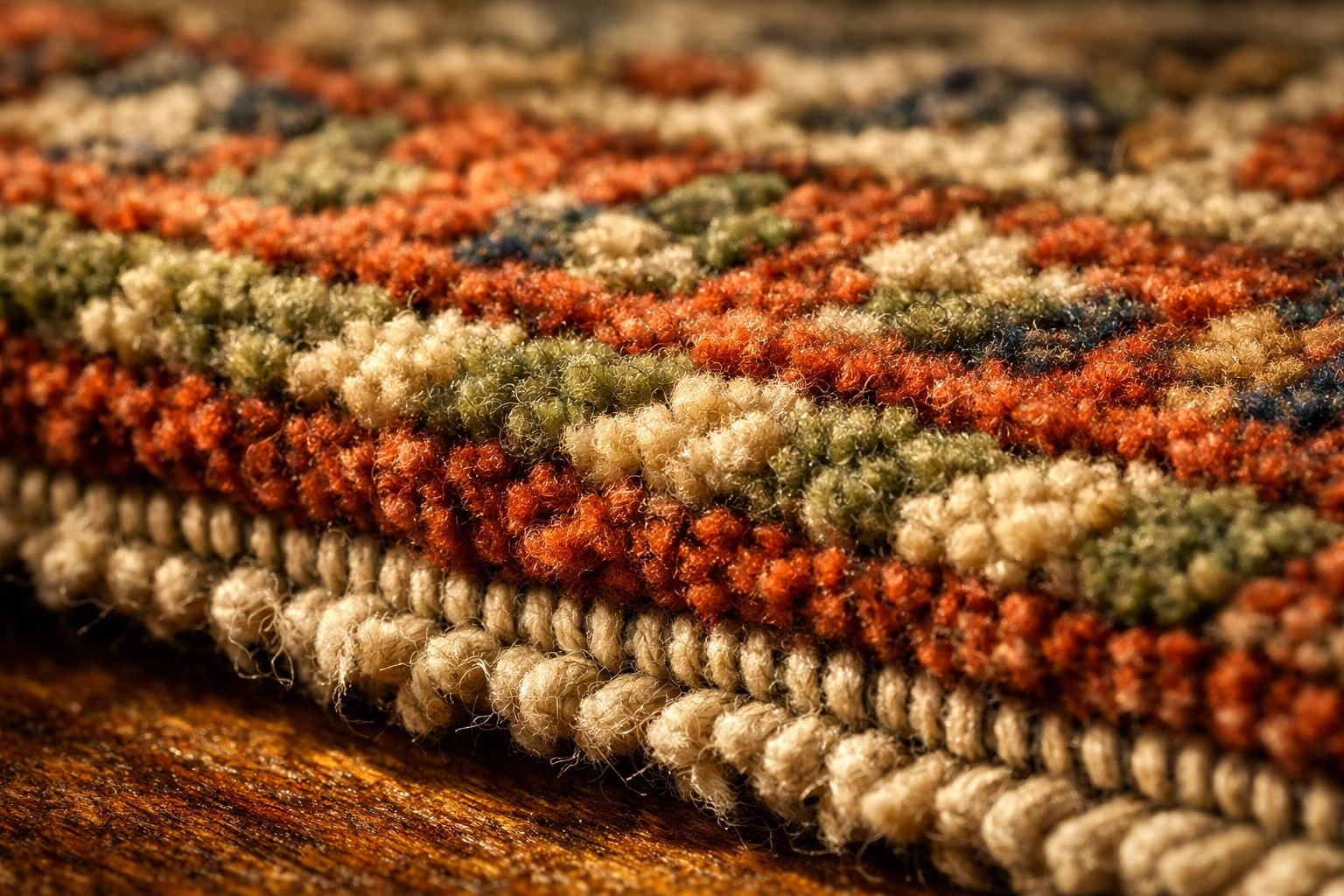
Handmade rugs often have subtle variations in color, shape, and pattern. These details are not imperfections. They are the fingerprints of the weaver!
You may notice gentle shifts in color called abrash, slight asymmetry, or small variations in the design. Each one was made with patience. Each one is unique. That human touch is part of what makes handwoven rugs so special.
For more helpful buying advice, explore our guide to authentic Persian rugs.
Choosing the Right Rug for Every Room
The best rug for your home depends on the room’s purpose, traffic level, furniture, and overall style. Start with function, then choose the colors and pattern that make your heart happy!
Living Room
Your living room rug should help connect the seating arrangement. In most layouts, the front legs of your sofa and chairs should rest on the rug. For a larger, more luxurious look, choose a rug large enough for all the furniture to sit comfortably on it.
A bold medallion rug can become the star of a neutral room. If your furniture already includes bright colors and patterns, choose a quieter design to create balance.
Dining Room
Choose a low- to medium-pile rug that allows dining chairs to slide smoothly. The rug should extend beyond the table so the chair legs remain on the rug when pulled out.
Traditional floral Persian rugs and warm, earthy oriental rugs look especially elegant beneath wood dining tables. They add softness and sophistication without making the room feel too formal.

Bedroom
Your bedroom should feel cozy, peaceful, and personal. A soft wool rug beneath the bed creates a welcoming landing spot for your feet each morning.
Neutral cream, beige, blue, and gray tones can create a restful atmosphere, while a vintage Persian rug in rich burgundy or navy can add romance and character.
Entryway and Hallway
High-traffic areas need durable, practical rugs with personality. A runner rug can add warmth to a long hallway, define an entryway, or bring color alongside a kitchen island.
Look for a sturdy hand knotted rug with a detailed pattern that can handle everyday activity while disguising small traces of dust and wear.

How to Choose a Rug Size
Wondering how to choose a rug size without making an expensive mistake? Start with measurements, not guesswork!
Measure the room, furniture arrangement, walkways, and door clearances before shopping. Then use these simple guidelines:
- Living room: At least the front legs of major seating should sit on the rug.
- Large living room: Choose a rug that accommodates the entire seating arrangement.
- Dining room: Allow approximately 24 inches of rug beyond the table on every side so chairs stay on the rug.
- Bedroom: Select a rug that extends beyond the sides and foot of the bed.
- Hallway: Leave a few inches of visible flooring along each side of a runner rug.
- Open-plan space: Use rugs to define separate zones for living, dining, and conversation areas.
A rug that is too small can make furniture look disconnected and leave the room feeling unfinished. That is a big NO-NO! When in doubt, go a little larger, or ask for expert guidance before you buy.
Our team can help you think through dimensions, furniture placement, color, and traffic flow. You can also read our complete rug sizing guide.
Easy Ways to Style Persian Rugs
Persian rugs are wonderfully versatile. They can complement traditional interiors, modern spaces, farmhouse homes, and everything in between!
Try these decorating ideas:
- Pair a detailed Persian rug with simple, neutral furniture so the pattern can shine.
- Repeat one or two rug colors in pillows, artwork, curtains, or throws.
- Use a vintage Persian rug to soften sleek contemporary furniture.
- Layer a smaller rug over a neutral natural-fiber rug for extra texture.
- Coordinate nearby rugs through shared colors without choosing identical patterns.
- Let an ornate rug warm up industrial elements such as metal, brick, or concrete.
Your rug does not need to match every item in the room. It simply needs to belong there. Look for a connection in color, mood, texture, or scale.
How to Clean a Persian Rug
One of the most common questions we hear is how to clean a Persian rug without damaging it. The short answer? Be gentle, and know when to call a professional!
For routine care:
- Vacuum regularly using gentle suction.
- Avoid aggressive beater bars, especially on delicate rugs.
- Vacuum in the direction of the pile.
- Do not pull or tug on the fringe.
- Blot spills immediately with a clean, dry cloth.
- Never rub a stain, which can push it deeper into the fibers.
- Avoid bleach, harsh chemicals, and untested household cleaners.
- Keep rugs away from prolonged, direct sunlight when possible.
- Rotate rugs periodically to distribute traffic and fading evenly.
- Use a quality rug pad to reduce slipping and protect the rug’s foundation.
Please skip the DIY steam cleaner! High heat, excess moisture, and the wrong cleaning solution can cause shrinkage, dye bleeding, or fiber damage. Natural dyes and fine wool require careful handling.
For deeper cleaning, our oriental rug cleaning service uses specialized methods designed for handwoven rugs. We also offer rug repair and rug appraisal services when your treasured piece needs extra care.
Why Shop at Persian Galleries of Knoxville?
Buying a rug is personal. You want to see the colors in real light, feel the texture, compare sizes, and ask questions without pressure. That is exactly what we love to provide!
At Persian Galleries of Knoxville, you will find an extensive selection of:
- Authentic Persian rugs
- Oriental rugs from a variety of styles and regions
- Hand knotted rugs in traditional and contemporary patterns
- Handwoven rugs made with beautiful natural materials
- Vintage Persian rugs with character and history
- Runner rugs for hallways, entries, and transitional spaces
- Large area rugs for living rooms, dining rooms, and open floor plans
We take great pride in offering personalized design guidance, honest recommendations, and free verbal quotes. Bring your room measurements, furniture dimensions, paint samples, or even a few photos of your space. We will help you explore different, unique, elegant, and beautiful options that suit your home and budget.
Visit Persian Galleries of Knoxville
Ready to find the rug that makes your room feel complete? Come and visit Persian Galleries of Knoxville! Our Knoxville gallery is here to help homeowners, interior designers, collectors, and decorators find pieces they will love for years to come.
Gallery hours:
- Monday–Saturday: 11:00 AM–5:00 PM
- Sunday: By appointment
Visit our contact page to plan your visit, or browse more helpful ideas on our blog.
Seeing a rug online is one thing. Feeling the texture, studying the craftsmanship, and watching the colors come alive in person? That is a treat you will have to see for yourself!
Leave a Reply
Want to join the discussion?Feel free to contribute!